

A metallic rattle from the turbo area is worth investigating. It does not automatically mean your Fiesta needs a brand-new turbocharger.
Wastegate wear is an issue we regularly investigate at Rival Performance. Here is what to look out for, how we approach diagnosis, and how to choose between a repair, a refurbished turbo and an upgrade.
Tell us about the rattle and we can discuss the next step.
Confirm where the noise is coming from before buying parts. Wear around the wastegate mechanism can cause a rattle and affect boost control, but noise or an underboost code alone does not confirm the fault. A specialist inspection should establish whether the wastegate can be repaired or the complete turbo needs attention.
What does wastegate wear feel like?
What you may hear
A metallic rattle near the turbo, sometimes more noticeable at idle, from cold or as you lift off the throttle. Tell us when it happens and whether it changes as the engine warms up.
What you may notice driving
Slower response, inconsistent boost or reduced performance. Some cars also show an engine warning light or an underboost fault such as P0299.
These are clues, not a diagnosis. Loose heat shields, exhaust components, air leaks and other boost-control faults can produce overlapping symptoms. A car can also have a rattle without an obvious loss of power.
We cannot judge that from a noise description alone. Arrange an inspection and avoid hard acceleration while the cause is uncertain. If you have smoke, sudden power loss, an oil-pressure warning or a severe new mechanical noise, stop safely and seek assistance rather than continuing to test it.
What actually wears in the wastegate?
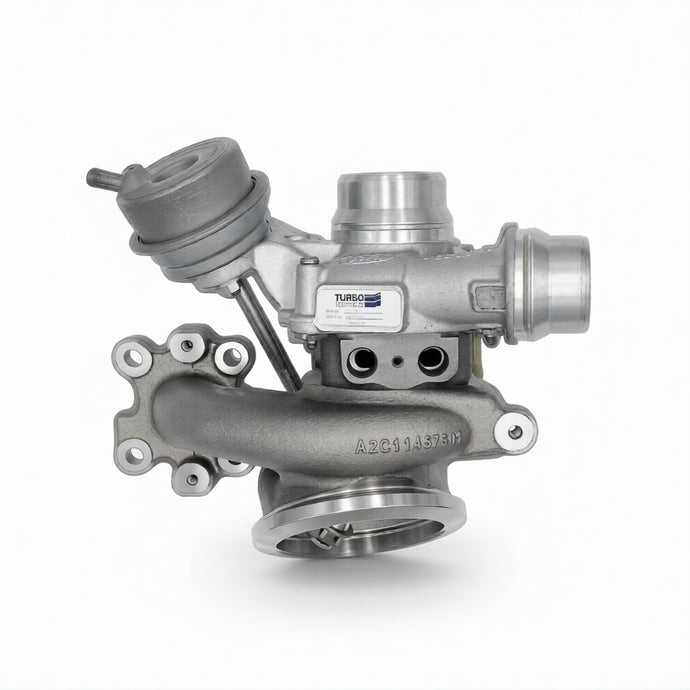
The wastegate controls how much exhaust gas bypasses the turbine, helping regulate boost. Its actuator moves a linkage connected to the wastegate flap.
Wear around the spindle, bush or linkage can allow unwanted movement and cause a metallic rattle. If the flap no longer closes or operates correctly, boost control can also suffer. The actuator and the wastegate mechanism are related parts, but replacing one does not automatically repair wear in the other.
That distinction matters: the repair needs to address the worn component, not simply quieten the noise.
How we approach diagnosis
- Understand the symptoms. When did the rattle start? Is the car standard or tuned? Has performance changed, and are any fault codes stored?
- Locate the noise and check the surrounding systems. Inspect the exhaust, heat shields, intake and boost pipework before assuming the turbo is responsible.
- Assess the wastegate and turbocharger. Check the mechanism, actuator operation and overall turbo condition against the relevant specifications.
- Compare requested and actual boost where appropriate. Diagnostic data and controlled testing help explain the fault. A duty-cycle reading or dyno number on its own is not enough.
Hands-on checks should be carried out with the engine stopped and cold. Do not put your hands near a hot turbo or moving components to try to silence a rattle.
Repair, refurbish or replace?
The right choice depends on the condition of the complete turbo, your budget and what you want from the car.
Wastegate repair
Worth considering when the fault is confined to the wastegate mechanism and the rest of the turbo passes inspection.
Check: what is repaired or upgraded, the condition of the core, the warranty and the turnaround. Ask us about the current repair route for your unit.
Refurbished standard-spec turbo
Often our preferred route when inspection shows the turbo needs more than an isolated wastegate repair. It keeps the focus on restoring the car's existing performance.
New OE turbocharger
A new original-equipment unit is another option. Compare the correct current part, price, warranty and availability with a specialist refurbishment.
A new turbo should not be ruled out simply because the old one developed a fault.
Hybrid turbo
If more power is already part of your plans, discuss the Turbo Technics S285 range. This is a performance project with calibration and supporting-hardware requirements, not just a rattle repair.
Our view: sort the mechanical condition first. For a road car, response, drivability and a setup suited to how you use it matter more than chasing a headline power figure. Confirm the exact turbo specification and fitment for your Mk8 or Mk8.5 before ordering.
Drive in. Drive out. Turbo sorted.
We offer a complete drive-in, drive-out package at our Rival Performance workshop. We carry out these jobs weekly and were one of the first specialists in the UK to offer this service.
The package includes a Turbo Technics refurbished turbocharger, removal of your existing unit, full installation and the parts needed for fitting. It operates on an exchange basis, with your removed factory Ford turbocharger exchanged as part of the service.
View the drive-in, drive-out package →
Plan your appointment
Contact us before booking so we can confirm the fault, the correct turbo for your car and workshop availability. Same-day completion depends on the unit being ready and no additional faults being found. We will confirm the expected turnaround with you.
Prefer supply only? See the refurbished turbo listing for the unit and installation requirements.
Questions owners often ask
Does P0299 mean the turbo is finished?
No. It indicates an underboost condition, not which component caused it. The intake and boost system, controls and turbo all need to be considered before recommending replacement.
Will tightening the actuator rod fix the rattle?
Changing an adjustment does not restore a worn bush or spindle. Incorrect adjustment can also affect boost control. Have the mechanism assessed and follow the correct setup procedure for the fitted turbo.
Do I need a remap after a repair?
A repair that restores the correct original specification is different from fitting a hybrid turbo. An upgrade needs a suitable calibration and supporting hardware. Tell us about any existing tune so we can advise on your particular setup.
Can a standard car develop this problem?
Yes. We investigate wastegate issues on both standard and modified cars. The fact that a car is tuned, or has never been tuned, does not establish the cause of its noise.
Tell us what your Fiesta is doing.
Send your registration or model year, mileage, modifications and when the rattle happens. Include any fault codes and a short video if you already have one. We can discuss inspection and the most suitable repair route.
Further reading: Garrett's turbo diagnostic guidance and Turbo Technics' S285 specification. General diagnostic guidance does not replace the service information for your exact vehicle.